Fleet Dashcam Buying Guide 2026: Choosing the Right AI Hardware for Your Fleet
A comprehensive guide on how to choose the best fleet dashcams in 2026. Learn about AI, 4G connectivity, ADAS, and DMS features to maximize fleet safety and ROI.
Introduction: Why Dashcams are More Than Just Recording Devices in 2026
In 2026, fleet management has evolved far beyond simple GPS tracking. The landscape of commercial transportation is now defined by Video Telematics. A dashcam is no longer just a passive recording device that you check after an accident; it is an active safety assistant that prevents accidents before they happen.
For fleet owners and operations managers, choosing the right dashcam is a critical decision that impacts insurance premiums, driver retention, and overall operational liability. This guide provides a deep dive into the technical specifications, AI capabilities, and ROI considerations you need to know before investing in fleet hardware this year.
1. Understanding the Core Hardware Types
Before diving into features, you must identify which hardware architecture suits your fleet’s specific needs.
1.1 Single-Channel Dashcams (Front-Facing)
Ideal for small delivery vans or service vehicles where the primary concern is documenting road incidents for insurance purposes. These are the most cost-effective but lack the comprehensive visibility required for large-scale logistics.
1.2 Dual-Channel / All-in-One AI Dashcams (Front & Cabin)
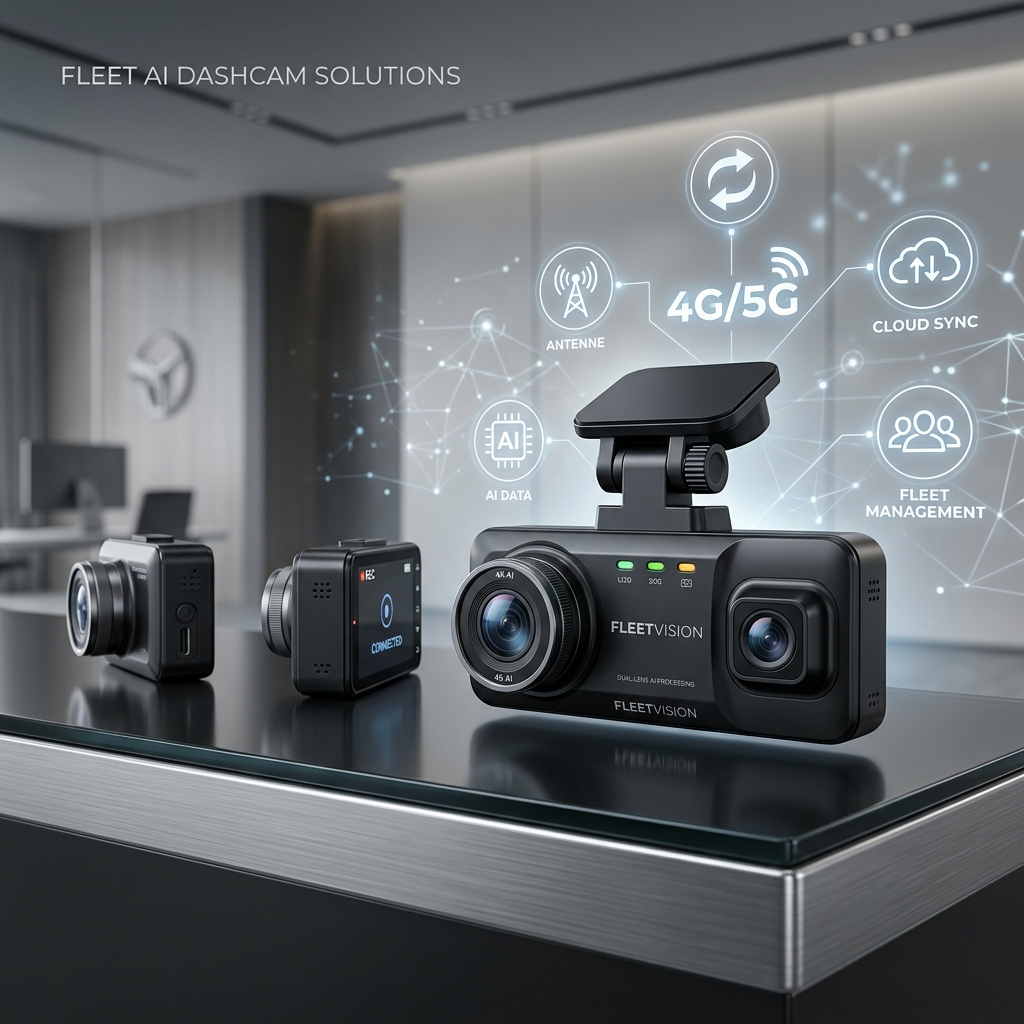
This is the current “gold standard” for commercial fleets. Devices like the FleetGoo D503 integrate both a road-facing camera and an infrared (IR) cabin-facing camera in a single compact unit. This setup allows for simultaneous monitoring of road conditions and driver behavior.
1.3 Multi-Channel MDVR Systems
For heavy-duty trucks, tankers, and buses, a standalone dashcam is often insufficient. Multi-Channel Mobile Digital Video Recorders (MDVRs) (such as the D904 series) allow for up to 8 camera inputs, providing 360-degree coverage, blind-spot monitoring, and cargo bay surveillance.
2. Competitive Edge: AI Features (ADAS & DMS)
In 2026, “AI-powered” is the most important keyword in the fleet dashcam buying guide. In-vehicle edge computing allows the camera to act as a co-pilot.
2.1 Advanced Driver Assistance Systems (ADAS)
ADAS monitors the road ahead using computer vision. Key features to look for:
- Forward Collision Warning (FCW): Alerts the driver if they are approaching the vehicle ahead too quickly.
- Lane Departure Warning (LDW): Notifies the driver if the vehicle begins to drift out of its lane without a turn signal.
- Pedestrian & Cyclist Detection: Crucial for urban last-mile delivery fleets.
2.2 Driver Monitoring Systems (DMS)
DMS focuses on the driver’s state. Using infrared cameras that work even in total darkness, a high-quality buying guide must emphasize these detections:
- Fatigue Detection: Identifying yawning or prolonged eye closure.
- Distraction Detection: Spotting phone usage or eating while driving.
- Smoking Detection: Ensuring compliance with safety regulations in hazardous material transport.
3. Connectivity: 4G/5G vs. SD Card Only
A “dumb” dashcam that only saves to an SD card is a risk in a commercial setting. 2026 hardware must prioritize Cloud Connectivity.
3.1 Real-Time Remote Live View
With a 4G-connected device, managers can “dial-in” to any vehicle in the world to see what is happening in real-time. This is vital for high-value cargo transport.
3.2 Instant Event Uploads
When an incident occurs (harsh braking, impact, or AI trigger), the device should automatically upload a 10-20 second “event clip” to the cloud. This ensures that even if the SD card is stolen or destroyed in an accident, the evidence is preserved.
3.3 H.265 Video Compression
Check if the hardware supports H.265 (HEVC). It provides the same video quality as older H.264 but uses 40-50% less data, significantly reducing your monthly SIM card costs.
4. Durability and Installation Standards
Hardware failure in the middle of a route is unacceptable. Commercial-grade equipment must meet certain industrial standards.
4.1 Anti-Vibration Design
Trucks vibrate significantly more than passenger cars. Ensure the dashcam has a secure mounting system and internal components designed to withstand constant vibration without losing connection or damaging the hard drive/SD card.
4.2 Thermal Management
Dashcams sit on windshields under direct sunlight. Look for devices with high-standard heat dissipation (aluminum housings) and operating temperatures up to 70°C (158°F).
4.3 Secure Wiring (Hardwired)
Avoid devices that use cigarette lighter plugs. Professional fleet dashcams must be hardwired to the vehicle’s fuse box or OBD-II port. This prevents drivers from accidentally or intentionally unplugging the device.
5. Integration with Fleet Management Software (SaaS)
Hardware is only as good as the platform that supports it. Your dashcam must be compatible with standard protocols to ensure it isn’t a “data island.”
- API & Webhooks: Can the camera data be integrated into your existing ERP or dispatch software?
- JT/T 808 & 1078 Protocols: For international logistics operating in or through regions with strict standards (like China or certain Middle Eastern corridors), compliance with these protocols is non-negotiable.
- Driver App Integration: Does the system provide a way for drivers to see their own safety scores and improve their behavior?
6. ROI Checklist: How to Calculate the Value
When presenting a dashcam project to stakeholders, focus on these four ROI pillars:
- Insurance Savings: Many insurers offer 10-15% discounts for fleets equipped with active AI dashcams.
- Exoneration: One single avoided “he-said, she-said” lawsuit for a major accident can pay for the entire fleet’s hardware costs 10 times over.
- Fuel Efficiency: AI coaching for harsh acceleration and idling can reduce fuel consumption by up to 10-15%.
- Reduction in Repair Costs: Fewer minor collisions mean lower maintenance and bodywork expenses.
Conclusion: Final Recommendations for 2026
When choosing a fleet dashcam, don’t just shop for the lowest price. Look for a partner that provides:
- High-definition (1080p+) multi-channel video.
- Proven AI algorithms for ADAS and DMS.
- Robust cloud connectivity and data security.
- H.265 compression for data savings.
By choosing hardware like FleetGoo’s D503 or D904 series, you are not just buying a camera; you are investing in a 24/7 digital safety net for your most valuable assets: your people and your vehicles.
Looking for a customized fleet hardware solution? Contact our experts today for a free hardware consultation.