ADAS vs DMS: What's the Real Difference for Fleet Safety?
ADAS and DMS are often mentioned together, but they serve different functions. This article clarifies the differences between Advanced Driver Assistance Systems and Driver Monitoring Systems for your fleet.
Clearing the Confusion: ADAS and DMS in Fleet Telematics
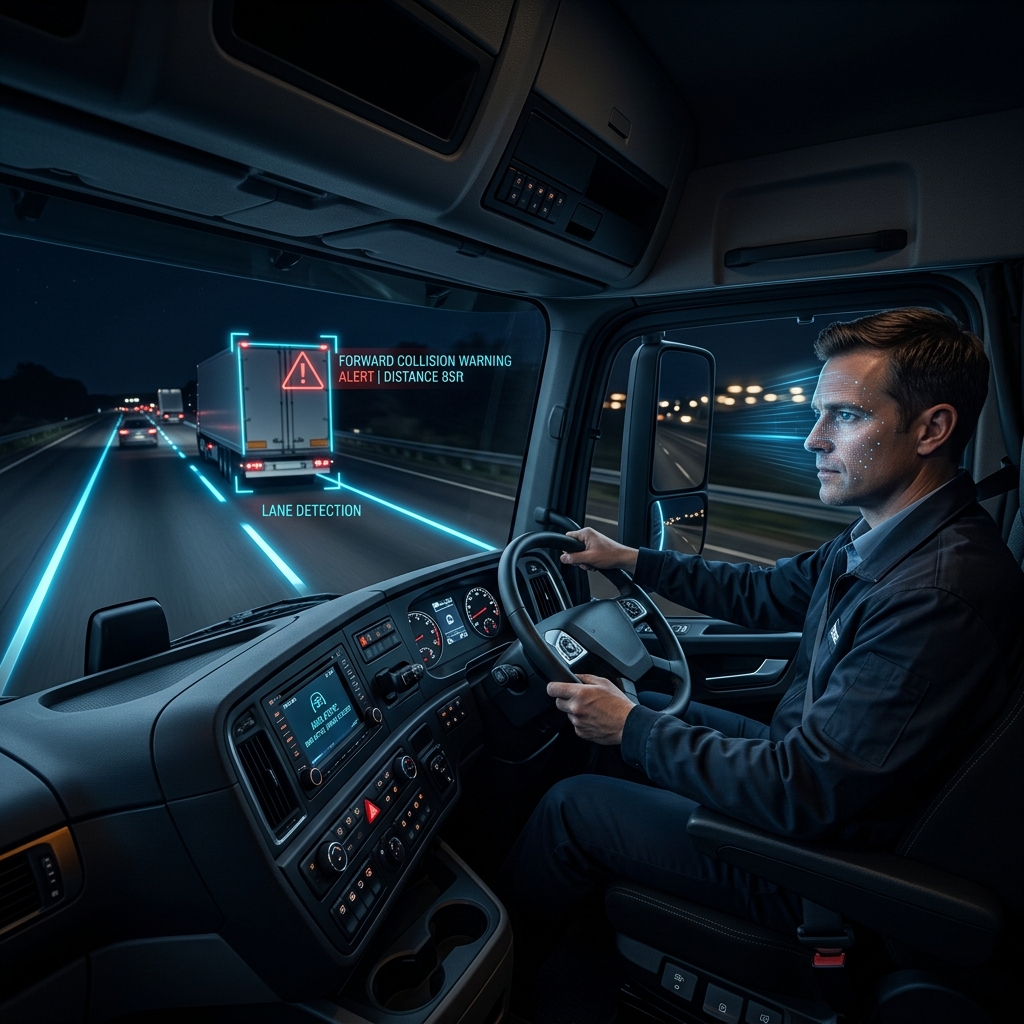
When you start researching AI-powered dashcams or MDVR systems for your fleet, you will constantly encounter the acronyms ADAS (Advanced Driver Assistance Systems) and DMS (Driver Monitoring Systems). While they are often bundled into the same device—like the FleetGoo D503 AI Dashcam—they are distinct technologies with different sensors, goals, and impacts on fleet safety.
To build a truly safe fleet in 2026, you must understand the “Who, What, and Where” of these two systems and how they work together to create a 360-degree safety net.
1. What is ADAS? (The Eyes on the Road)
ADAS stands for Advanced Driver Assistance Systems. Think of ADAS as a system that looks outside the vehicle. It uses a high-definition, road-facing camera and computer vision algorithms to interpret what is happening in the vehicle’s surrounding environment.
1.1 Key Functions of ADAS
- Forward Collision Warning (FCW): Monitors the distance to the vehicle ahead.
- Lane Departure Warning (LDW): Recognizes lane markings and warns if the driver drifts without a signal.
- Headway Monitoring: Measures the “following distance” in seconds to ensure the driver isn’t tailgating.
- Pedestrian Detection: Identifies humans or cyclists in the vehicle’s path.
1.2 The Goal of ADAS
The primary goal of ADAS is to alert the driver to external hazards. It helps compensate for the physics of heavy vehicles (which have long braking distances) by providing warnings that give drivers the extra second they need to react to external road events.
2. What is DMS? (The Eyes on the Driver)
DMS stands for Driver Monitoring Systems. While ADAS looks outside, DMS looks inside the cabin. It uses a driver-facing camera—usually equipped with Infrared (IR) LEDs to see in total darkness—and AI models specially trained to recognize human facial patterns and body movements.
2.1 Key Functions of DMS
- Fatigue Detection: Analyzes eyelid closure, head position, and yawning.
- Distraction Detection: Detects when the driver’s gaze is away from the road for more than a few seconds.
- Phone Usage: Identifies the specific posture and shape of a driver holding or using a smartphone.
- Seatbelt Compliance: Ensures the driver has their seatbelt properly fastened while the vehicle is in motion.
- Smoking & Eating: Detects behaviors that are often prohibited by fleet safety policies or hazardous cargo regulations.
2.2 The Goal of DMS
The primary goal of DMS is to monitor and manage driver behavior. Since human error is responsible for over 90% of all traffic accidents, DMS acts as a crucial line of defense against the most common internal causes of crashes: tired or distracted drivers.
3. Comparison Table: ADAS vs. DMS
| Feature | ADAS (Outside) | DMS (Inside) |
|---|---|---|
| Camera Focus | The Road / Traffic | The Driver’s Face & Cabin |
| Core Detection | Vehicles, Lanes, Pedestrians | Eyes, Fatigue, Phone, Smoking |
| Primary Benefit | Preventing External Collisions | Preventing Distracted Driving |
| Best For | Long-haul Highway Logistics | Urban Delivery & Busy Routes |
| Hardware | HD CMOS Road Lens | IR-equipped Interior Lens |
4. Why You Need Both: The Unified Safety Net
While you could install a dashcam that only has ADAS or only has DMS, modern fleet management demands both. They are complementary technologies.
Imagine a scenario where a truck is drifting out of its lane.
- The ADAS would trigger a Lane Departure Warning because it sees the truck crossing the line.
- The DMS would simultaneously see that the driver’s eyes are closed (fatigue).
When these two data points are combined, the system knows that this isn’t just an accidental drift—it’s an emergency. This combined data can be used to trigger high-priority alerts to the dispatcher or even initiate in-cabin audio warnings.
5. Implementation: What to Look for in Hardware
When selecting hardware that supports both ADAS and DMS, look for the following:
- Dual-Lens Integration: Choose an “All-in-One” device like the FleetGoo D503 for easier installation and better data synchronization.
- Night Vision Capabilities: Ensure the DMS camera has high-quality IR LEDs so it can accurately detect fatigue in the middle of the night.
- Low False-Positive Rate: Professional AI models (like those used in FleetGoo hardware) are tuned to minimize “nuisance alerts,” ensuring that drivers don’t ignore the warnings.
- Privacy Covers: To build trust with drivers, some DMS units come with physical or digital privacy shutters that only activate when the vehicle is in motion.
Conclusion: Balancing External Hazards and Internal Risks
Understanding the difference between ADAS and DMS is the first step toward building a data-driven safety culture. ADAS protects your vehicles from the world, and DMS protects your drivers from themselves.
By deploying a system that integrates both, you are addressing the two most significant risk factors in modern logistics, leading to lower accident rates, reduced insurance costs, and most importantly, a safer environment for everyone on the road.
Still have questions about ADAS and DMS? Download our full whitepaper or schedule a free demo.